I first read Annie Dillard my senior year of college. Dillard is most famous for her Pulitzer-prize winning Pilgrim at Tinker Creek, but I read Holy the Firm. The book is set in the Pacific Northwest, where I would subsequently move a few years after college. The copy I have is 76-pages long; it took Dillard a year-and-a-half of steady writing to complete. If you’re math-inclined, that’s forty-four (44!) words a day. For context, the last word in this sentence is the 87th I’ve written so far.
Holy the Firm is deceptively easy to read. At the same time it’s deeply considered. Dillard makes that seem easy. It’s not. I’m not good at summarizing books, but here’s my jacket copy:
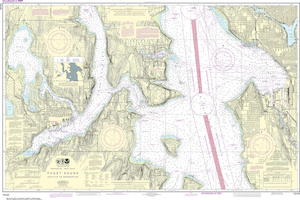
The book is about islands—many of which you can see scattered across Puget Sound—and God—who, depending on your acuity, either is or is-not as easy to see as the aforementioned scattered islands. It’s also about candles and camping and spiders and salt water and the eucharist wine and burned children and time and light and some other stuff.
I’ve moved many times in the nearly 30-years since I first read Holy the Firm but still have that same college-copy on my shelves. I imagine it’ll stay with me until I can’t read any longer. I don’t know if that’s the highest compliment you can pay an author, but it gets close.
Here’s another compliment: I cannot write either profusion or profligacy without thinking of Dillard. (I believe the phrase, profusions of profligacies is used somewhere in Pilgrim. That may not be literally true; knowing that wouldn’t change a thing for me.)
Here’s another one: after Dillard died I grabbed my copy of Holy the Firm and began reading. I intended to breeze through it so I could provide a nice little review in this essay. I made it six paragraphs before I had to stop because Dillard’s time would not be pigeonholed into mine.
Here’s another one: by that same sixth paragraph I was weeping.
There’s an early passage in Holy the Firm where Dillard is camping. She’s reading a book that inspired her to want to become a writer when she was young. As she’s reading a moth flies into her candle and gets stuck in the wax. Trapped, the moth’s body becomes a second flame that casts more light upon the world.
I can’t think of a more accurate metaphor for what it means to create. I don’t mean to create entertainments. Those are relatively easy and part of the reason AI is poised to iterate them endlessly. I mean any act of making that transforms darkness into light, just as that moth fused its life with the flame to brighten the world. Those acts are uncommon. They’re also costly, for you don’t come away with some charring.
Annie Dillard was a light to me. That might sound simple. Perhaps it is, though who could explain why some parts of the world brighten our vision? When you look around these days it’s clear that things are real dark out there. We all need good lights. For that, thanks, Annie.